Fact or Fiction: Common Misconceptions About Adoption
Every child deserves a safe and loving family. Families choose adoption for many reasons. Some have biological kids and want to welcome additional children through adoption; some have fertility challenges; and others may have always known that they want to adopt. Ultimately, all of these people share a devotion to caring for children.
As you embark on your adoption journey, you’ll likely come across a lot of information, some of it conflicting, some accurate and timely, and some presented as factual but not. Myths and misconceptions about adoption can lead to confusion and reinforce stereotypes. Let’s take a look at some common misconceptions.
Misconception: Becoming a foster parent is the first step towards becoming an adoptive parent.
Foster care is intended to provide safe, temporary homes for children whose biological parents are working toward reunification. Many parents meet the requirements for reunification, allowing these children to return home. 70% of the children who enter Wisconsin’s foster care system are successfully reunited with their birth families. So, what about the other 30%? When the court determines that a child cannot be reunited with their family, the plan for the child will become adoption. The child welfare system works to locate a family through adoption or guardianship. The child may be placed with another biological relative, adopted by their foster parents, or by a non-foster-parent licensed adoptive family. Learn more by reading our Public Adoption packet.
Misconception: Adoption is a second-choice option for families who can’t have biological children.
Adoption is not a second choice, and for many families, adoption has always been their first choice. Adoption is a fulfilling way to create a family, and some people dream of adopting children their entire lives. Adoptive parents come from various backgrounds and have different reasons for choosing adoption.
Misconception: Open adoption is confusing for children.
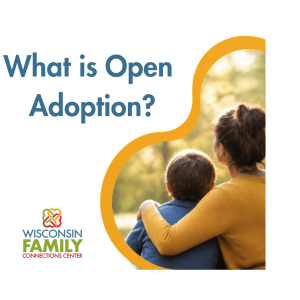
Despite what you may have heard, open adoption is an incredible way to raise a child. Who doesn’t need more people who love them? Ongoing contact between the adoptive family, birth family, and the adopted child benefits everyone involved. Open adoption can give children who have been adopted a sense of identity and connection. It can help birth parents and the child work through feelings of loss and grief. Your adoption professional can offer guidance, support, and mediation services and help you ensure that relationships remain healthy for everyone involved.
Misconception: The younger the child is when adopted, the fewer challenges will occur.
Simply put, adopting a younger child doesn’t automatically guarantee fewer challenges. In fact, every family situation is different. Just as with biological children, there is no guarantee that an adoptive parent won’t be faced with challenging behaviors. Children who are currently in foster care and need adoptive families are typically elementary school age and older, and you may learn helpful information about their past. There are ways to predict potential challenges, such as exposure to drugs or alcohol in utero, family mental health issues, and the historical behavior of the child. However, no type of adoption exists without loss. While children adopted in infancy may not remember their birth parents, their feelings of loss will still be there, just as they are for older children.
Misconception: Birth parents don’t care about their children.
This stereotype has persisted in the world of adoption and oversimplifies the complex situations that birth parents experience. Birth parents who choose adoption do so out of profound love and concern for the well-being of their child. This selfless choice shows a desire to provide their child with the best possible life, even if that means making the decision to place them for adoption.
Some birth parents may face challenges or life choices that result in children being placed in the foster care system. In many cases, birth parents remain deeply invested in their child’s future and want to ensure that they have the opportunities and stability that will provide them with the best future. These parents have often experienced multiple traumas and are doing the best they can. Debunking this misconception is essential to understanding adoption with compassion.
Misconception: Adopted children or children who have been in foster care have more emotional and behavioral problems and are out of control or even dangerous.
All children who have experienced adoption or foster care have experienced trauma. Research shows that the single most significant protective factor in any child’s life is their relationship with their parents. Decades of psychological and neurological research have shown that trauma has a profound and lasting impact on children’s brains. It takes years to heal from these psychological wounds.
While some adopted children may have challenges related to their adoption, there is no evidence to suggest they are more prone to emotional and behavioral problems than their non-adopted peers. A trauma-informed family will be able to work through issues that will often end up making stronger connections between parents and children in the long run. The Wisconsin Family Connections Center offers a wealth of resources, support, and educational materials to help you understand where challenging behaviors may come from and how to handle them with compassion and empathy. When children feel safe and cared for, behaviors will change. But understand that this doesn’t happen overnight. Time, patience, and unwavering support are what is needed.
Every family is different, and adoption is unique to each family. What is true for one family may not be true for yours. The Wisconsin Family Connections Center is here to support you by answering questions or clarifying information when needed. Please contact us at 1-800-762-8063 or by email at info@wifamilyconnectionscenter.org.
Resources
What to Consider When Considering Adoption
What do These Behaviors Mean? How Children Process and Respond to Trauma