Education & Adoption: Working With Students and Families
You became an educator because you care—about learning, yes, but even more about the children in front of you. You want your classroom to be a place where every student feels welcomed, valued, and understood, no matter their background or family story. For some of your students, that story includes adoption.
Maybe you’ve already had an adopted child in your classroom, or maybe you will in the future. With about 1 in every 25 U.S. families touched by adoption, chances are high that you’ll meet not just one, but many adoptees and adoptive families throughout your career. And while every adoption story is different—some children were adopted as infants, others joined their families through foster care, and some were adopted by relatives—each carries layers of history, emotions, and relationships.
Adoption can be filled with joy, but it can also hold loss and big feelings that sometimes show up in the classroom. That’s where you come in. Your role goes far beyond academics—you have the chance to create a safe, inclusive space where all children feel they belong.
This guide offers practical tools and insights to help you understand and support students who were adopted. Because when educators lead with empathy and awareness, every child benefits—and every classroom becomes a place where kids can thrive.
The Language of Adoption
“Are those your real parents?” You wouldn’t let a child get away with swearing in your classroom or using racist language. As importantly, you need to be aware of negative language related to adoption. The language we choose can be immensely powerful. All families are “real” families, and all parents are “real parents.” Once a child has been adopted, the new parents are simply the child’s mother, father, or parents.
It’s important that teachers understand this and model appropriate, positive language. The National Council for Adoption has an excellent chart showing examples of accurate adoption language. When might this be applicable in a classroom? In addition to the teachable moment portrayed above, adoption may come up during lessons about how families come together–multiracial, blended, divorced, and adoptive families. It will undoubtedly be discussed during studies of genetics or inherited characteristics. In addition, many pieces of literature have adoption as a plotline.
As a teacher, you can be a valuable source of assistance and advocacy for a child who was adopted. Occasions may arise when a child is asked a personal question about adoption that they are unable to answer, or a child may be teased about their birth or adoptive family. It is the child’s choice to discuss it or not. As a support to the child, you may need to step in and let that be known. Seek input from the child’s parents about how best to handle the situation. They will likely be grateful that you are looking for ways to support the child.
Trauma and Adoption
Outside the family, teachers and other school staff play a significant role in a child’s development, given the amount of time spent in the school setting. It’s essential for teachers to be aware of the behaviors that some children—both pre- and post-adoption—might exhibit in the classroom.
The time leading up to an adoption and after the adoption is finalized can be stressful. Children may exhibit unique behaviors during this time. Instead of focusing on the behaviors, you may want to dig deeper and explore the underlying reasons. Children who are in the process of adoption may be dealing with the following:
- grappling with issues related to identity, belonging, or attachment
- experiencing loss and grief, and the confusion of why they feel that way during what is supposed to be a happy time
- figuring out how to be in a family of a different culture or ethnic group
As any good teacher knows, relationships are key. Kids learn the most from teachers when they have a positive connection. It can be hard to adjust your classroom expectations. However, children who may have experienced significant trauma or prenatal exposure to drugs and alcohol may have educational and behavioral goals that are slightly different from their peers. You may need to consider variations in your teaching techniques or classroom management. For example:
- Isolating punishments such as a time-out or separation from the class might trigger a negative or unexpected response in some children. If the child exhibits off-task behavior during work time, you might consider sitting next to them for a few moments as a “time in” to help them regulate.
- If a child exhibits a negative, unexpected response, remain calm. Give the child time to become emotionally regulated before discussing the consequences of the behavior.
- Write out a schedule to enable the child to follow along visually. Inform the child when there will be a change in routine.
You may also want to view the Champion Classrooms webinar, Erasing the Belonging Gap Within Schools. This webinar gives more practical examples of how educators and school staff can create a sense of belonging for kids who have been adopted.
Curriculum Concerns
Family trees. Baby pictures. Adopt a Highway. Genetics. Researching cultural backgrounds. These are all topics that can be triggering for not only adoptees but for any child from a family that may have come together in a way that is not seen as “traditional.” Sometimes, teachers give kids who were adopted alternate assignments from the rest of the class. Although that may seem helpful and compassionate, it further points out how they differ from “everyone else.” Instead of creating an alternative assignment, consider the goals of each project and determine if there are different routes you could take to reach the same purpose.
For example, if the goal of a family tree assignment is to research the past, choose a historical event such as Hurricane Katrina or 9/11 and have your students interview family members, neighbors, or teachers about their recollections of it. If the goal is to learn more about their family, have them write about family traditions and have family members assist them in tracing the tradition back to when it started and why. For example, the question of why a family eats lasagna and turkey on Thanksgiving could be traced back to relatives who immigrated from Italy.
Common assignments and alternative ideas can be found in our tip sheet, Navigating Homework Challenges: Understanding Triggers for Children in Alternative Living Arrangements.
Be an Advocate
Intrusive questions about adoption are the norm for most school-age kids. Help your students feel empowered to share or not share what they want regarding their adoption story. Never share something about a child’s story without their permission.
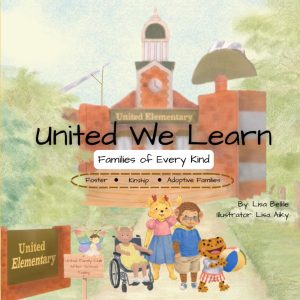
Educators can be advocates for children who were adopted and their families. It can be frustrating for adoptive parents when they feel like no one in the school understands their child. You can be that one person in the school or district who is their champion. Share what you have learned here during teachable moments with other teachers, librarians, school counselors or social workers, lunchroom monitors, or classroom aides. We encourage you to look at the book resource list and consider purchasing some titles for your classroom or professional library. Thank you for supporting our children and families!
Resources
From the Resource Library
- Fostering Across Wisconsin Newsletter: School Tools
- Navigating Homework Challenges: Understanding Triggers for Children in Alternative Living Arrangements
Learn in the Champion Classrooms
- Erasing the Belonging Gap Within Schools
- Conscious Responses: What Parents and Schools Need to Know to Support Kids Impacted by Trauma
Books Lists
Elementary
- ABC, Adoption & Me by Gayle Swift
- And That’s Why She’s My Mama by Tiarra Nazario
- We’re Not All the Same, but We’re Still Family by Theresa Fraser
- My New Mom & Me by Renata Galindo
- Yes, I’m Adopted! by Sharlie Zinniger
Middle and High School
- Adopted Teens Only: A Survival Guide to Adolescence by Danea Gorbett
- The Face In The Mirror – Teenagers and Adoption by Marion Crook
- Two Moms in My Heart by Al Desetta & Youth Communication
- Pictures of Hollis Woods by Patricia Reilly Giff
- I Will Never Give Up by Derek W. Clark
Professionals
- Fostering Resilient Learners: Strategies for Creating a Trauma-Sensitive Classroom by Kristin Souers
- Building Self-Esteem in Children and Teens Who Are Adopted or Fostered by Dr. Sue Cornbluth
- Groundbreaking Interventions: Working with Traumatized Children, Teens, and Families in Foster Care and Adoption by Jeanette Yoffe
- Adoption and the Schools by Lansing Wood & Nancy Ng
- Teaching the Hurt Child – Relationships Between Trauma, Attachment, and Learning by Andrea Chatwin